Comparing Alpharetta Swim Tennis Neighborhoods
Pool season comes fast in Alpharetta. If you’re eyeing a swim-tennis neighborhood, the choices can feel overwhelming and the fees confusing. You want great amenities and a smart investment without surprise costs later. In this guide, you’ll learn how these communities work, what fees actually cover, how to read listings, and which documents to request so you can compare neighborhoods with confidence. Let’s dive in.
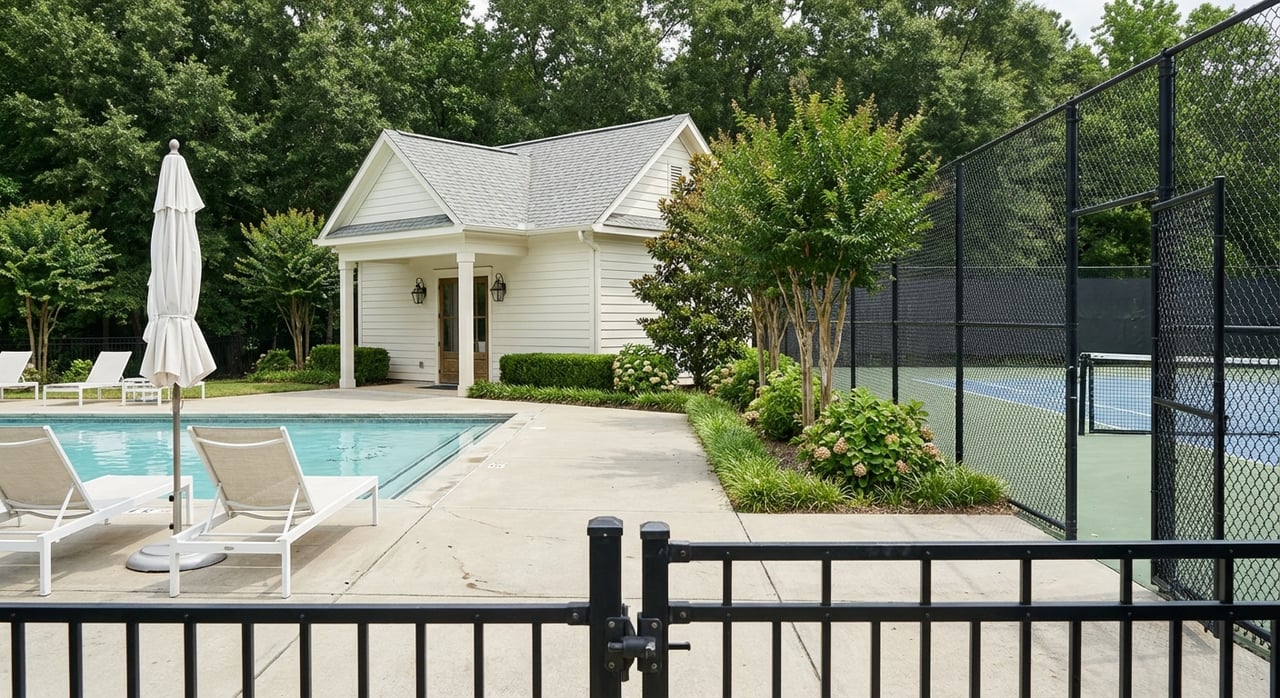
In North Fulton, a “swim-tennis” neighborhood typically has a community pool, multiple tennis courts, a clubhouse, and shared open spaces maintained by an HOA. Many will also offer organized ALTA or USTA teams, summer swim programs, and community events. Some master-planned areas add a lake, marina, or private club option within the community. You can see the variety across local examples of swim-tennis communities in North Atlanta neighborhoods. (Overview of local swim-tennis communities)
Amenities vary by neighborhood. Common features include junior-Olympic or lap pools, zero-entry or toddler areas, water slides, lighted tennis courts (hard or clay), emerging pickleball conversions, rentable clubhouses with kitchens, playgrounds, and fitness centers. Upper-tier developments like Windward illustrate large, multi-facility complexes with a private lake and marina. (Windward community overview)
Most of Alpharetta’s swim-tennis areas are single-family communities with traditional, European-inspired, or modern transitional plans. Lot sizes range from standard suburban parcels to larger estate lots. Some master plans include patio homes or townhomes in select enclaves, which can change your HOA structure and fees.
School assignment is a top priority for many move-up buyers. Attendance zones can change, and assignments vary by street. Always verify a specific property’s school by using Fulton County Schools’ lookup tools before you write an offer. (Fulton County Schools attendance-zone resources)
Below are quick snapshots to help you understand how community structures, amenities, and costs can differ. Use them as a starting point, then confirm specifics for the property you love.
Windward is a large master-planned community centered on Lake Windward with many sub-neighborhoods. The private Windward Lake Club operates pools, tennis, and the marina, and membership is often separate from the base HOA in many enclaves. Home prices range widely by enclave and by proximity to the lake. (Windward overview) (Windward Lake Club amenities)
Crooked Creek is a gated, amenity-rich neighborhood featuring multiple pools, tennis courts, and on-site golf adjacency. The HOA outlines active programming across swim, tennis, and social events, which supports a community feel for many residents. (Crooked Creek HOA amenities)
The Manor Golf & Country Club combines an HOA community with a full private club lifestyle. Amenities include a Tom Watson–designed golf course, indoor and outdoor tennis facilities, junior-Olympic pools, and a large clubhouse. Club membership costs are separate from standard HOA dues. (The Manor amenities) (The Manor membership info)
Closer to downtown Alpharetta, Glen Abbey and Park Brooke are established swim-tennis options with large clubhouses, multiple courts, and playgrounds. These neighborhoods are common choices for move-up families who value organized amenities and close-in convenience.
Nesbit Lakes features a community lake setting with a swim-tennis complex that includes an Olympic-sized pool and multiple courts. Neighborhood programming typically supports an active social calendar.
These Windward-area enclaves reflect the classic suburban swim-tennis model with on-site pools, courts, and rentable clubhouses. HOA dues vary by enclave and property type, so be sure to compare fee structures closely.
The most important step when you compare communities is to separate HOA assessments from optional or required club dues. Listings can blur these details, so build your comparison using the documents and links below.
Recent listing examples show how fees can vary by neighborhood and property type:
Treat these as illustrative only. Always confirm current amounts in the HOA’s budget and resale documents for the specific property.
To compare neighborhoods fairly, convert everything to annual figures:
Example: If the HOA is 1,600 dollars per year and a club charges 2,200 dollars per year, plus an 8,000 dollar one-time initiation, you can amortize that initiation over 10 years at 800 dollars per year. Your total annual community cost would be about 4,600 dollars if you join the club.
Use MLS fields as a start, then ask the HOA and management company to confirm details. (MLS field definitions)
A well-run HOA maintains both an operating fund and a reserve fund that covers future capital projects, such as resurfacing courts or major pool repairs. The standard tool for forecasting and funding these needs is a reserve study. Underfunded reserves are the most common cause of surprise special assessments, so always request the most recent reserve study, reserve schedule, and current bank balance for reserves. (How reserve studies work)
Georgia’s Property Owners’ Association Act governs how associations operate, collect assessments, and enforce covenants, including the ability to place liens for unpaid fees as described in the recorded documents. It also explains voting standards and how increases or special assessments can be enacted. Review the declaration and bylaws, then confirm processes in recent board minutes. (Georgia POA Act overview)
Before you make an offer, or at least during your due-diligence window, request the full HOA and club packet so you can verify costs and rules:
If the documents show upcoming projects without funding or active litigation, you can negotiate for a seller credit, escrow holdback, or price adjustment. If risks are too high, consider withdrawing within your contingency.
As of January 2026, Alpharetta’s median sale price is about 712,000 dollars, and typical home value estimates are around 708,600 dollars at the city level. Use these as a baseline when you consider community premiums. Well-maintained amenities, funded reserves, and active social programming can support stronger resale demand among buyers who value neighborhood activities. Gated entries and private security can also add a premium for some segments. On the other hand, higher HOA dues and large club initiation costs can reduce the buyer pool. Restrictive rental rules may limit investor interest, which can affect resale dynamics.
Title companies and lenders often require an HOA resale or estoppel certificate. Management firms may charge a fee and need several days to produce it. Order the packet early in your due-diligence period so you have time to review budgets, reserves, and minutes. If you plan to add a fence, pool, or solar, consider adding a contingency or pre-approval clause for ACC review.
You deserve a clear, design-forward plan that fits how you live. As a Designer-Advisor, Darron helps you weigh HOA versus club costs, interpret reserve studies and minutes, and spot value in homes that can shine with the right updates. You will see apples-to-apples cost comparisons, realistic improvement budgets, and staging or light-renovation ideas that protect long-term resale.
Ready to compare neighborhoods with confidence and find the right swim-tennis fit? Connect with Darron O'Bonnon Real Estate for a design-forward market consultation.

Whether you're in the research phase at the beginning of your real estate search or know exactly what you're looking for, you'll benefit from having a real estate professional.