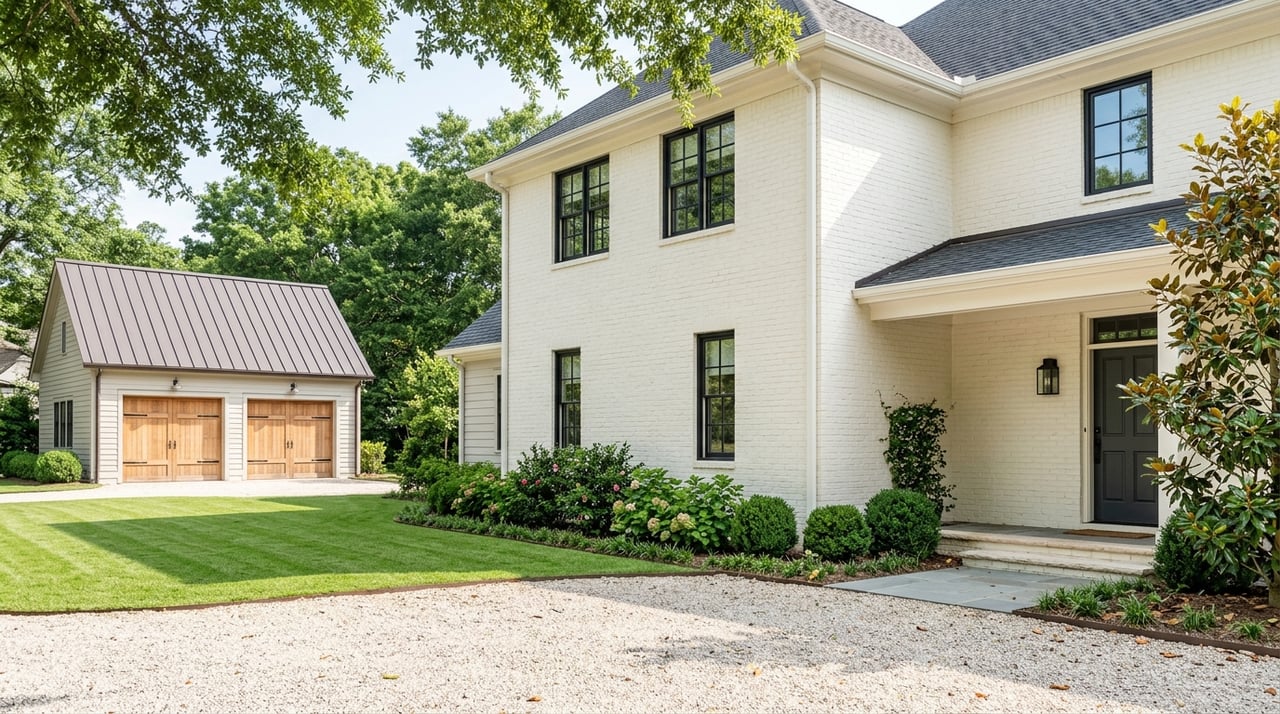
Milton Acreage Home Values and Zoning Insights
Wondering why one 3-acre property in Milton commands strong buyer interest while another sits longer or sells with concessions? In Milton, acreage matters, but the real value story is usually about what the land can legally and practically support. If you are buying or selling here, understanding how zoning, lot shape, frontage, and improvement potential work together can help you price more accurately and make better decisions. Let’s dive in.
Milton is not a market where land is just extra lawn. City materials show that more than 90% of land within Milton is low or very low-density residential, and the city has more than 200 active horse farms. That gives acreage a meaningful role in how buyers think about privacy, flexibility, and long-term value.
Milton also treats any property of 3 acres or more as a large lot. That matters because once a property moves into that category, buyers often compare it differently than a standard suburban homesite. They are not just buying square footage inside the house. They are also evaluating how the land supports a certain lifestyle, layout, and use.
Citywide, Milton remains an active upper-tier market. A recent market snapshot showed 296 homes for sale, a median list price of $1.38 million, and a typical 46 days on market. While that is not specific to acreage homes, it helps explain why land, privacy, and utility stay central to pricing conversations here.
Acreage only tells part of the story. In Milton, zoning and lot geometry often have a bigger effect on value than the total number of acres on paper. A larger tract may sound more valuable, but if the site has limited frontage, awkward shape, or restricted buildable area, buyers may not pay a proportionate premium.
The dominant acreage zoning category in Milton is AG-1. The city describes AG-1 as a district intended to include residential parcels, single-family subdivisions, agricultural uses, and closely related uses. That broad description can sound flexible, but the details still matter.
Under the current code excerpt, AG-1 lots on paved roads require at least 150 feet of width and a 1-acre minimum lot size. On unpaved roads, AG-1 requires 200 feet of width and 3 acres minimum. Cul-de-sac lots can be a special exception with 100 feet of width.
In 2022, Milton expanded the AG-1 minimum lot width at the building line from 100 feet to 150 feet for future lots created through certain plat processes. City officials said narrower lots can reduce buildable space for features like pools and porches and can make lots appear denser. For buyers and sellers, that is a strong reminder that width and layout affect value because they shape what the property can comfortably accommodate.
One of the biggest misconceptions in acreage pricing is that extra land cures every issue. In Milton, it does not. The city states that a variance cannot provide relief from use, minimum lot area, or minimum lot frontage.
That means a property can have substantial acreage and still face limitations if it does not meet frontage or other core standards. For valuation, this is important because buyers tend to pay more for land that is clearly conforming and easier to use. Legal status reduces uncertainty, and uncertainty often affects price and timing.
This same principle shows up in appraisal practice. Appraisals must identify the zoning class and whether a property is conforming, nonconforming, illegal, or unzoned. They also consider highest and best use, meaning the use must be legally permitted, physically possible, and financially feasible.
In a market like Milton, buyers typically reward usable acreage more than abstract acreage. They want land that fits the house, supports future improvements, and feels functional in everyday life. That often includes privacy, sensible lot shape, room for outdoor amenities, and placement options for structures that match the property’s setting.
For many buyers, value increases when the site can support features such as:
Milton’s own variance cases show that structures like barns, sheds, cabanas, detached garages, and pool pavilions often require setback relief. That does not mean these features are impossible. It does mean buyers tend to place more value on properties where those improvements appear more straightforward, legal, and well-suited to the lot.
More land does not always translate into a higher sale price in equal proportion. If part of the site is constrained by setbacks, buffers, tree preservation, odd geometry, stream-related limits, or utility constraints, that portion may function more like visual open space than active buildable value.
This is where two properties with similar acreage can perform very differently. One may offer a clean building envelope and practical improvement options. The other may have more technical limitations, which can narrow the buyer pool or lead buyers to discount the extra land.
That distinction matters for sellers. Overpricing based on total acreage alone can lead to longer market time if buyers see the usable area differently. For buyers, it is a reminder to look past the headline lot size and study how the site actually works.
Milton’s zoning environment is not static. In 2026, the city approved AG-1 changes that included a 20% lot coverage cap for parcels touching a public street right-of-way, a 25% cap for parcels of 3 acres or larger, new standards for functional buildable and usable areas, and a 20-foot natural area setback along roads for new minor plats.
The Planning Commission also considered additional AG-1 text amendments aimed at preserving rural character, including a provision for large tracts of 10 acres and larger. Around the same period, the city extended and later lifted a moratorium on certain AG-1 subdivision applications while reviewing lots under 3 acres.
For home values, the takeaway is simple. Milton is paying close attention to development intensity, lot form, and rural character. In a market like this, value often follows compliance, usability, and alignment with the city’s long-term planning direction.
In Milton, accessory structures can be a real selling point, but only when they can be built or maintained legally. The city requires residential permits for detached accessory structures, additions, garages, decks, sheds, and similar work. So a future barn, pool house, or detached garage is not automatic value. It becomes value when the property can support it under the code and the site layout.
This is where design-minded planning matters. A well-positioned structure that respects setbacks and supports the home’s overall layout can make the property feel more complete and more useful. A structure that requires redesign, cleanup, or variance risk may still have appeal, but buyers often price in that effort.
Subdivision potential can influence value, but it should be handled with caution. Because Milton does not allow variances for minimum lot area or frontage, not every larger tract can be split in a practical or legal way. Buyers who assume future division is easy may overestimate value.
The city’s recent review of AG-1 subdivision activity under 3 acres adds another layer. That review signals a more careful approach to density and lot creation. In pricing discussions, this means subdivision potential should be treated as a specific, evidence-based factor, not a broad assumption.
Milton has a well-established equestrian identity. The city’s Equestrian Committee exists to support and protect the interests of equestrian enthusiasts and farm owners, which reinforces that horse-related land use remains part of the local market.
That does not mean horse properties receive automatic value premiums. It does mean there is an identifiable buyer segment that looks for acreage with the right layout, zoning fit, and utility for equestrian use. For those buyers, the presence of usable land can matter more than the total size alone.
The city is also considering large-lot incentives tied to horse-related uses, including ideas involving covered riding arenas on 10-plus-acre properties and rebuilding existing equestrian structures without Board of Zoning Appeals approval. Even so, the value conversation still comes back to permitted use, lot layout, and legal feasibility.
Carrying costs can affect how buyers view larger tracts. Fulton County assesses property annually at fair market value. Georgia’s CUVA program allows qualifying conservation-use land to be assessed at 40% of current use value for a 10-year covenant period.
For qualifying agricultural tracts, that can lower carrying costs and support interest from a different pool of buyers. It may not change the market sale price on its own, but it can influence affordability, ownership strategy, and how a property is positioned.
If you are selling acreage in Milton, your pricing should reflect usable land, not just total land. Buyers tend to respond best when the property’s strengths are clear and specific. That may include frontage, lot shape, privacy, conforming status, and realistic improvement potential.
Presentation matters too. In an upper-tier market, buyers notice how the house and land work together. A property that clearly shows where a pool, detached garage, barn, or outdoor living area fits can feel more valuable than a similar property with unclear site planning.
This is also where a design-forward strategy can help. When you frame the land through function, layout, and future use, buyers can understand the opportunity more quickly and with more confidence.
If you are buying in Milton, do not stop at acreage. Ask how the lot is zoned, whether it is conforming, how much frontage it has, and what the site can support without unusual hurdles. A beautiful tract on paper can become less appealing if the buildable area is more limited than expected.
You should also think ahead. If your goal includes a pool, detached garage, barn, or other structure, the land needs to support that use in a practical way. In Milton, good acreage buys are often the ones where utility, code compliance, and long-term livability already line up.
If you want a clearer read on how acreage, zoning, and design potential affect a specific property in Milton, Darron O'Bonnon Real Estate offers calm, design-forward guidance to help you evaluate value, positioning, and next steps.

Whether you're in the research phase at the beginning of your real estate search or know exactly what you're looking for, you'll benefit from having a real estate professional.